
Walk through any neighbourhood in the Philippines, and you’re bound to hear it: the sharp snap of a card hitting a table, followed by a chorus of laughter or a collective groan. These traditional larong baraha, or card games, are a social cornerstone, played everywhere from festive family reunions to quiet corner stores. More than a simple pastime, card games in the Philippines are a dynamic, living part of the culture that brings people together. Check out Daftar PANGLIMA88 to know more
The wonderful thing is that you don’t need any special equipment to join the fun. The most popular Filipino card games use the same standard 52-card deck you probably already own, making them surprisingly accessible. While they feature unique rules and rankings that set them apart, their core mechanics are easy to grasp for anyone who has ever held a hand of cards.
This guide introduces the action-packed rules of Pusoy Dos, a thrilling shedding game about getting rid of your cards first, and Tong-its, a clever rummy-style game that rewards strategic thinking. Grab a deck, and let’s get you ready to play.
Your First Game: How to Play Pusoy Dos for Beginners
If you’re looking for a fast-paced game with a simple goal, you’ve found it in Pusoy Dos. The objective is straightforward: be the first player to get rid of all your cards. Think of it like a competitive version of Crazy Eights, where everyone is racing to empty their hands. This style of game is often called a “shedding” or “climbing” game, and it’s all about playing ever-stronger cards to leave your opponents behind.
Getting a game of Pusoy Dos started couldn’t be easier. You just need a standard deck of cards and a few friends. For the classic four-player version, the setup is a breeze:
- First, the dealer passes out all 52 cards, giving each player a hand of 13.
- Next, everyone looks at their cards to find a specific one.
- The player who was dealt the 3 of Diamonds ♦️ begins the game. This rule ensures there’s never any argument about who goes first!
The person with the 3 of Diamonds must start the very first round by playing that card, either by itself or as part of a valid combination (like a pair of 3s). Once they’ve played, the turn passes to the left. This all sounds simple enough, but how do you know which cards are “stronger”? This is where Pusoy Dos introduces its biggest and most important twist.
The Pusoy Dos Twist: Understanding the Unique Card Ranks
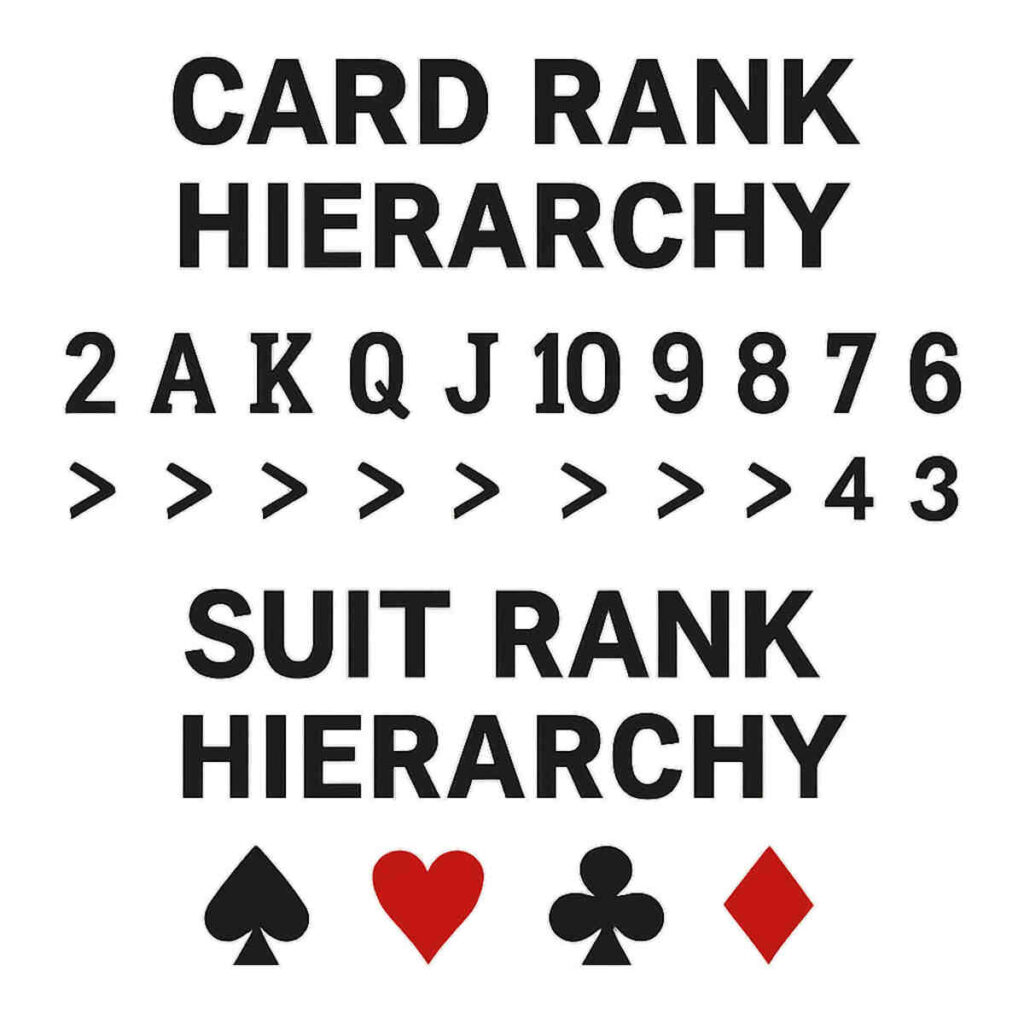
The first rule of Pusoy Dos is to forget what you know about card values from games like Poker. Here, the hierarchy is completely inverted. The 2 is the most powerful rank, while the 3 is the weakest. This is why the game starts with the lowly 3 of Diamonds—it’s the absolute bottom of the barrel, a safe play that anyone can beat.
Rank Order (High to Low): 2, A, K, Q, J, 10, 9, 8, 7, 6, 5, 4, 3
On top of this flipped ranking, the suits themselves have their own pecking order. This becomes crucial for breaking ties between cards of the same rank. Spades are the strongest, followed by Hearts, then Clubs, and finally Diamonds as the weakest. For example, if one player lays down the 7 of Clubs, the next player can beat it with the 7 of Hearts or 7 of Spades.
Suit Order (High to Low): Spades ♠️ > Hearts ♥️ > Clubs ♣️ > Diamonds ♦️
When you combine these two rules, one card emerges as the undisputed champion of the deck: the 2 of Spades. As the highest-ranking card (2) in the highest-ranking suit (Spades), it is the single most powerful card in the game and cannot be beaten when played by itself. With this new hierarchy in mind, you’re ready to learn what powerful combinations you can build.
Making Your Move in Pusoy Dos: What Hands You Can Play
The gameplay in Pusoy Dos follows one simple, driving rule: beat it or pass. When it’s your turn, you must play a hand of the same type as the previous player, but of a higher value based on the ranks you just learned. For example, if someone plays a single 8 of Hearts, you must play a higher single card. If you can’t—or strategically choose not to—you simply say “pass,” and the turn moves to the next person.
Your playable hands, or combinations, start simple. You can play a single card, a pair (two cards of the same rank), or a three-of-a-kind. If the player before you lays down a pair of 7s, you could beat it with a pair of 10s, a pair of Queens, or even another pair of 7s as long as your highest suit is stronger. This same logic applies to all singles and sets.
Beyond these basics, you can also play powerful five-card combinations that follow standard poker hand rankings. This is where you can make a huge impact on the game. In order from weakest to strongest, these are:
- Straight (e.g., 4-5-6-7-8)
- Flush (five cards of the same suit)
- Full House (a pair plus a three-of-a-kind)
- Four-of-a-Kind (plus one random card)
- Straight Flush
Here’s a crucial rule that opens up the strategy: a five-card hand can be used to beat any lower combination. If another player leads with a single King of Spades, you aren’t stuck looking for an Ace or a 2. You can seize control by dropping any valid five-card hand, like a simple straight. This allows you to reset the play and force everyone else to follow your lead.
Switching Gears: An Introduction to Tong-its
While Pusoy Dos is a fast-paced race to get rid of your cards, Tong-its is a game of careful collection and clever strategy. If you’ve ever played Rummy, the core idea will feel instantly familiar. Instead of shedding cards, your primary goal is to arrange them into valid sets and sequences, known in Filipino as bahay (houses), which you display on the table. This simple shift creates a completely different kind of challenge, rewarding patience and thoughtful planning over aggressive plays.
The ultimate objective in Tong-its is to minimize the points of the cards left in your hand. At the end of a round, every card you’re still holding counts against you. This completely flips the script on what makes a “good” card; suddenly, that King or Queen becomes a 10-point liability you want to meld or discard as quickly as possible. The winner is the player with the lowest point total, making it a game of reduction and efficiency.
A round can end in one of three dramatic ways. The most decisive victory is declaring “Tong-its!” by using all of your cards in melds, leaving you with an empty hand. If you believe you have the lowest score but can’t empty your hand, you can “Challenge” to force an early showdown and a point count. But if no one makes these bold moves, the game simply concludes when the central draw pile runs out of cards, at which point the player with the lowest score quietly takes the win.
The Rhythm of a Round: Draw, Meld, Discard
A turn in Tong-its follows a simple, three-part rhythm that’s easy to pick up, making it perfect for beginners. First, you draw one card, either from the top of the central stock pile or, more strategically, by picking up the last card your opponent discarded. Next, you have the option to meld—that is, to lay down any valid combinations, or bahay, from your hand onto the table. Finally, you must discard one card from your hand to the discard pile, officially ending your turn. This draw-meld-discard cycle is the core loop of the game.
The key to lowering your score is forming valid melds. There are two primary Tong-its hand combinations you can play:
- Sets (or Pangkat): Three or four cards of the same rank, like [8♠️ 8♥️ 8♦️].
- Runs (or Sunod): Three or more sequential cards of the same suit, like [9♣️ 10♣️ J♣️]. You can also “sapaw” by adding a card from your hand to an existing meld on the table (either yours or an opponent’s), which is a great way to get rid of a high-point card.
But what happens if the draw pile runs out before anyone declares “Tong-its!”? This is when you count points. The player with the lowest score wins the round. Card values are straightforward:
- Ace: 1 point
- Number Cards (2-9): Face value
- Face Cards (10, J, Q, K): 10 points each
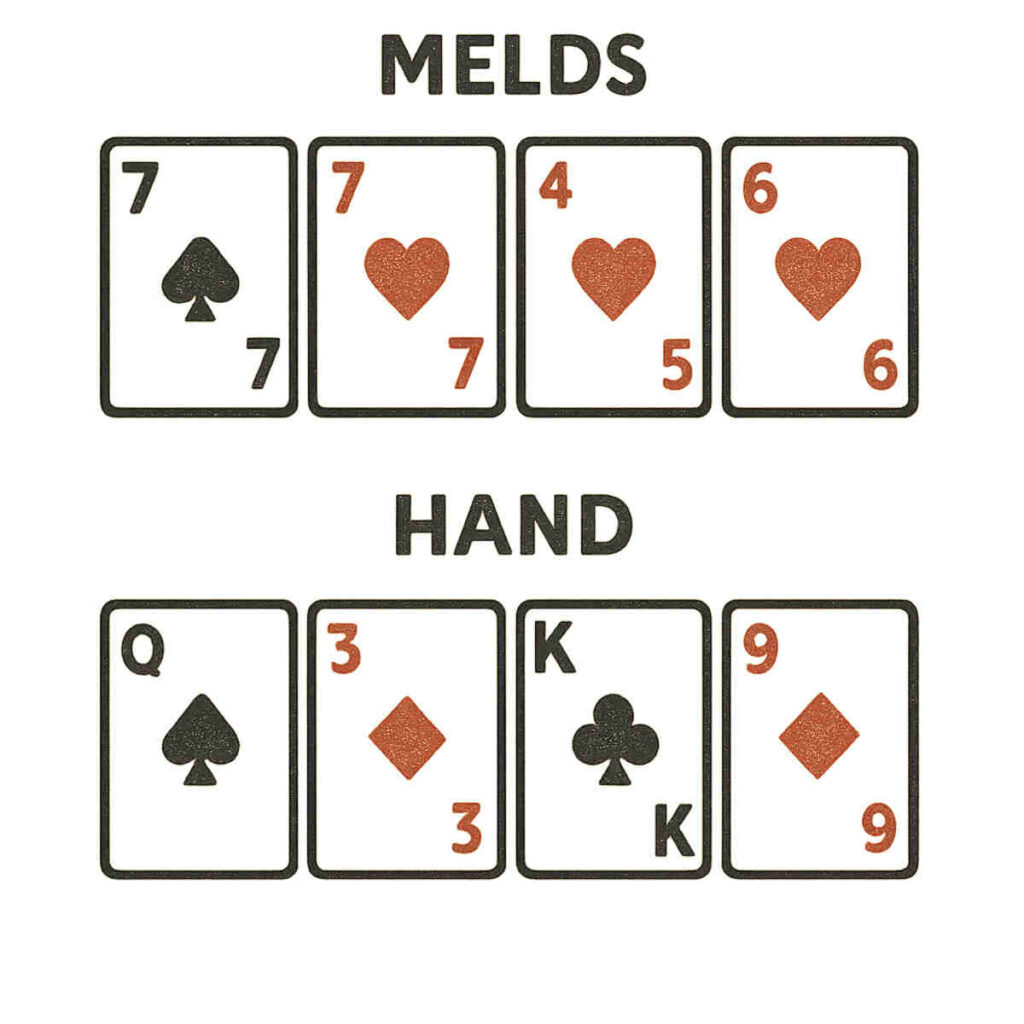
For example, imagine this is your play area at the end of a round:
Your Hand: [9♣️ K♦️] Your Melds on Table: [7♠️ 7♥️ 7♦️] [4♣️ 5♣️ 6♣️]
The melds on the table don’t count towards your score. You only count the cards left in your hand. In this case, your total score is 19 (9 from the 9♣️ + 10 from the K♦️). If another player has 21 points and the third has 25, you win.
Beyond the Big Two: A Quick Look at Other Pinoy Card Games
While Pusoy Dos and Tong-its are popular, other games reveal a different side of Filipino card culture. One fascinating example is Sakla, a betting game traditionally played at wakes using a 40-card Spanish tarot deck. Players bet on a mat, guessing which card combinations the dealer will reveal. This practice connects deeply to tradition, making a sakla card game tutorial as much a cultural lesson as a ruleset.
For those who enjoy tile-based games like Mahjong, the Philippines offers a unique card-based equivalent called Cuajo. The goal is similar—forming sets and sequences—but the cuajo card game instructions involve special 112-card packs printed with Chinese characters. It’s an intricate game of strategy where the cards function more like tiles, creating a distinct and challenging experience that rewards careful planning.
On the simpler end of the spectrum is Unggoy-ungguyan, or the “monkey-monkey game.” If you’ve ever played Old Maid, you already know the unggoy-ungguyan game mechanics. Players take turns drawing cards and discarding pairs, trying to avoid being the last one holding the single unpaired “monkey” card. Its easy rules and lighthearted fun make it one of the best two-player Pinoy card games for all ages, perfect for a quick and cheerful match.
Taking the Games from Page to Table: Where to Play Next
You started this journey familiar with games like Poker or Rummy; now, you hold the rules to a vibrant piece of Filipino social life. The concepts of shedding cards in Pusoy Dos or forming sets in Tong-its are no longer a mystery. They are an invitation to clear your table, gather your friends, and play.
To put that new knowledge into motion, start by searching your phone’s app store for “Pusoy Dos online” or “Tongits” to find free versions where you can practice. Once you feel comfortable, introduce the game to your friends by playing an “open hand” practice round where everyone can see the cards and discuss their moves. Before you deal the first hand, always agree as a group whether you’re playing for fun or for small stakes to keep the atmosphere light and friendly for all.
That standard 52-card deck on your shelf is now something more. It’s no longer just for Solitaire; it’s a bridge to another culture and a toolkit for an evening of laughter and connection. You haven’t just learned a new set of rules—you’ve unlocked a tradition of easy card games perfect for your own family gatherings.