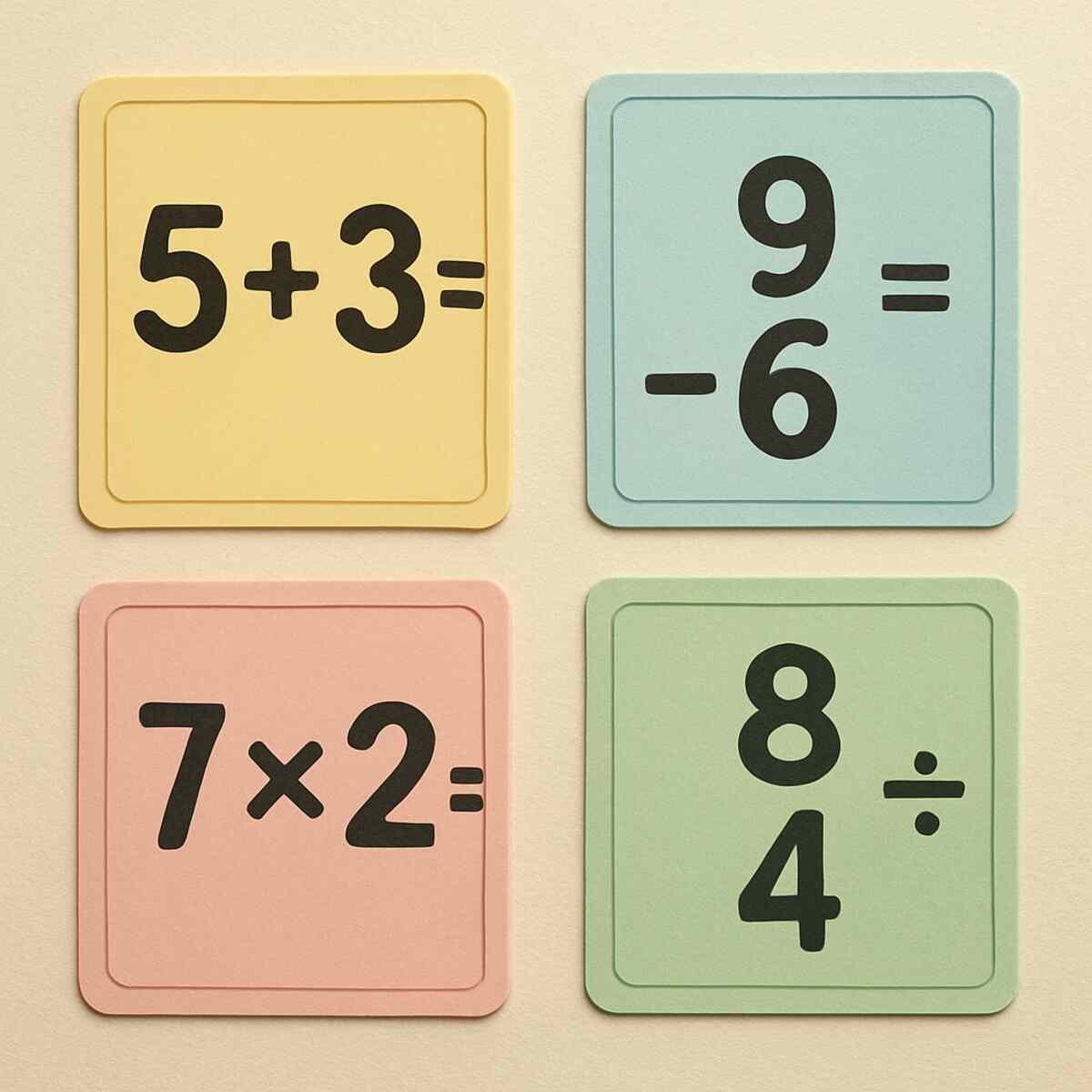
Hey there, math enthusiasts! Are you ready to dive into the exciting world of the 24 Math Card Game? Whether you’re a math whiz or just someone who loves a good challenge, this game is a fantastic way to sharpen your arithmetic skills. Plus, it’s loads of fun! In this article, we’ll explore some cool strategies to help you become a master at the 24 Math Card Game. Let’s get started! To know more, check out PREMAN189
Understanding the Basics
Before we jump into strategies, let’s quickly go over the basics of the game. The 24 Math Card Game involves cards with four numbers on each. The goal is to use these numbers and basic arithmetic operations (addition, subtraction, multiplication, and division) to reach the number 24. It sounds simple, but it can be quite tricky!
The Rules of the Game
- Use All Four Numbers: You must use all four numbers on the card. No skipping allowed! This rule ensures you engage with every element, making each card a unique puzzle.
- Basic Operations Only: Stick to addition, subtraction, multiplication, and division. This restriction encourages creativity within limits, testing your ability to manipulate numbers effectively.
- Reach Exactly 24: Your final result must be exactly 24. No more, no less. Precision is key here, sharpening your attention to detail and calculation accuracy.
Understanding Card Layout
The card layout can often give you hints. Notice the arrangement of numbers, their size, and their relationships. Sometimes, the layout might suggest a starting point or an operation. For instance, numbers placed closely together might be meant to be paired or combined.
Mindset Matters
Approach each card with a problem-solving mindset. Remember, each card is solvable, and sometimes the solution requires thinking outside the box. Cultivating a positive and curious attitude can transform challenges into enjoyable puzzles.
Strategy 1: Look for Multiples
One of the first things to consider is looking for multiples of 24 within the numbers on the card. If you can spot a number that, when multiplied by others, reaches 24, you’re on the right track. For example, if your card has numbers like 3, 8, and 1, you’re in luck! 3 multiplied by 8 equals 24. Quick win!
Exercise: Practice with Multiples
Try finding multiples of 24 in these sets of numbers:
- 2, 3, 4, 8: Notice how 8 is a significant factor, and when multiplied by 3, it gives 24.
- 1, 6, 4, 6: Here, 6 and 4 multiply to 24, showing how repetition can be used creatively.
- 3, 3, 3, 8: Multiplying 3 by 8 demonstrates the power of recognizing patterns within the numbers.
Advanced Multiples
Look for hidden multiples by combining operations. For instance, if you have a 2 and a 12, recognize that multiplying them gives 24 directly. However, combining them through other operations could also yield the result.
Spotting Patterns
Regular practice helps you spot patterns. Notice which numbers frequently appear together and how they can be manipulated. Over time, you’ll develop an intuition for identifying potential multiples quickly.
Strategy 2: Break Down the Problem
Sometimes, the direct approach might not work. In these cases, it’s useful to break down the numbers into smaller components. This can involve using addition or subtraction to create intermediate results that are easier to work with.
Example: Breaking It Down
Imagine your card has the numbers 5, 5, 5, and 4. You can break it down like this:
- (5 + 5) = 10: Start by creating a manageable sum. This first step helps simplify the problem.
- (5 – 4) = 1: Use subtraction to generate a useful small number. This component can act as a multiplier or a way to adjust other sums.
- 10 x 1 = 10: Multiplying can sometimes seem unnecessary, but it organizes your numbers for the next steps.
- 10 + 10 + 4 = 24: Reassemble the numbers to reach your goal. This step shows the importance of reconsidering each component’s role.
Decomposition Techniques
Break down complex problems into simpler parts. If you’re overwhelmed by numbers, try simplifying them into sums or differences that are easier to work with.
Simplify First
Before jumping into operations, simplify. Look for numbers that can be combined quickly to reduce complexity. This approach helps you focus on fewer numbers and operations.
Re-assessment
After breaking down, reassess your components. Sometimes, the first breakdown isn’t the most efficient. Re-evaluating can reveal new pathways to reach 24.
Strategy 3: Use Pairing
Pairing numbers is another effective strategy. By pairing two numbers, you can simplify the problem and open up new possibilities for reaching 24. Look for combinations that create results closer to 24 or break them into manageable parts.
Exercise: Practice Pairing
Try pairing numbers in these sets to reach 24:
- 6, 2, 3, 4: Pair 6 and 4 to get 24 directly, or use 3 and 2 to manipulate other numbers.
- 7, 2, 1, 4: Pair 7 and 4 first, then consider how 2 and 1 can adjust the total.
- 8, 3, 2, 1: Pair 8 and 3 to begin with a strong base, then see how 2 and 1 can fit into the equation.
Pairing Benefits
Pairing simplifies numbers into manageable chunks. It’s often easier to deal with two numbers at a time, making calculations less daunting. This approach also helps in visualizing how numbers interact.
Dynamic Pairing
Be open to changing pairs as you work through the card. Sometimes the first pair doesn’t lead to a solution, but switching combinations can uncover new possibilities.
Experiment with Combinations
Experiment with different pairings to see which yields better results. This practice enhances your adaptability and prepares you for unexpected number arrangements.
Strategy 4: Experiment with Operations
Don’t be afraid to experiment with different operations. Sometimes the solution lies in trying unexpected combinations. Keep an open mind and test various approaches until you find the one that works.
Pro Tip: Stay Flexible
Flexibility is key in the 24 Math Card Game. If one approach isn’t working, pivot and try something else. The more you practice, the more patterns you’ll recognize, and the quicker you’ll become at solving these puzzles.
Creative Problem Solving
Think creatively when using operations. Sometimes, unconventional methods lead to the solution. For example, alternating between addition and subtraction might uncover hidden connections between numbers.
Trial and Error
Engage in trial and error without hesitation. Testing various operations expands your understanding of how numbers interact and often leads to innovative solutions.
Learn from Mistakes
Mistakes are valuable learning tools. Analyze where an operation went wrong and why a different approach might work. This reflection fosters deeper understanding and skill enhancement.
Strategy 5: Practice Makes Perfect
Like any skill, becoming a master at the 24 Math Card Game requires practice. The more you play, the better you’ll get at spotting patterns and finding solutions. Set aside some time each day to play a few rounds and challenge yourself to solve the cards faster each time.
Daily Practice Challenge
Take 10 minutes every day to solve at least five 24 Math Card Game cards. Track your time and try to improve your speed and accuracy over the weeks.
Consistent Practice
Consistency is crucial for improvement. Regular practice helps reinforce the strategies and techniques learned, making them second nature over time.
Tracking Progress
Keep a record of your progress. Note the time taken for each card and the strategies used. This tracking allows you to see improvement and identify areas needing more focus.
Set Goals
Set achievable goals for each practice session. Whether it’s solving a certain number of cards or reducing your time, having targets keeps you motivated and directed.
Conclusion
There you have it! With these strategies in your toolkit, you’re well on your way to mastering the 24 Math Card Game. Remember, the key is to stay patient, practice regularly, and most importantly, have fun! The skills you develop here can sharpen your math abilities and provide hours of entertainment.
Embrace Challenges
Embrace each card as a new challenge. The more you tackle, the more adept you’ll become at finding solutions quickly and efficiently.
Share Your Journey
Share your journey with friends or online communities. Discussing strategies and solutions can provide new insights and foster a collaborative learning environment.
Celebrate Successes
Celebrate each success, no matter how small. Acknowledge the progress made and the skills honed, reinforcing the joy of mastering this engaging game.
So grab a deck of 24 Math Cards and start playing today. Who knows, you might just uncover a math genius within you!
Happy gaming, and may the numbers be ever in your favor!